
Your Guide to Buying a Mercedes-Benz Sprinter in Québec
July 31 2026,
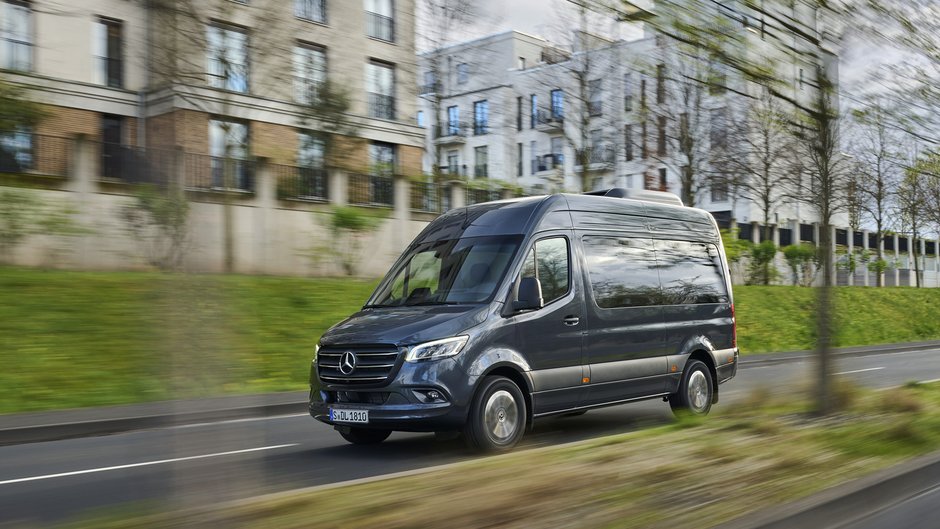
Few vehicles have shaped the commercial van segment the way the Sprinter has. For almost three decades, it has served couriers, contractors, fleet operators and upfitters who need a vehicle that can be configured around the job rather than the other way around. Buying one starts with understanding the choices in front of you: engine output, drivetrain, wheelbase, roof height and body style all shape how the van performs once it is loaded and on the road.
This guide breaks down what separates one Sprinter configuration from another, so you can match the van to your actual workload instead of guessing. From payload and towing figures to the safety and technology systems that come standard, here is what to look at before you decide.
At a Glance: Sprinter Powertrain Options
Every Sprinter is built around a 2.0 L 4-cylinder turbo-diesel engine, offered in two output levels. Standard Output models pair with rear-wheel drive, while High Output models open up the choice between rear-wheel drive and all-wheel drive with a 50/50 torque split.
|
Feature |
Standard Output |
High Output |
|
Horsepower |
168 hp |
208 hp |
|
Torque |
295 lb-ft |
332 lb-ft |
|
Drivetrain |
Rear-wheel drive |
Rear-wheel drive or all-wheel drive |
|
Transmission |
9G-TRONIC 9-speed automatic |
9G-TRONIC 9-speed automatic |
All-wheel drive models can also be equipped with off-road upgrades, a detail worth considering for routes that run through construction sites or unpaved terrain during Canadian winters.
Payload, Towing and Cargo Space
The numbers that matter most to a fleet buyer are the ones tied to what the van can actually carry and pull. Depending on configuration, the Sprinter offers payload capacity up to 6,812 lbs (3,090 kg) and towing capacity up to 7,500 lbs (3,402 kg) on higher-capacity setups. Cargo volume climbs as high as 13,800 L on the 4,318 mm (170 in.) wheelbase paired with the high roof.
- Payload: up to 6,812 lbs (3,090 kg)
- Towing: up to 7,500 lbs (3,402 kg)
- Cargo volume: up to 13,800 L on the longest wheelbase and high roof
- Fuel tank: 92.7 L
Higher-capacity configurations exist for operators who need to move heavier loads regularly, so it is worth discussing your typical load weight before settling on a wheelbase and roof height.
Body Styles and Configurations

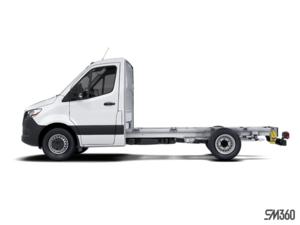
The Sprinter lineup covers Cargo Van, Crew Van, Passenger Van and Cab Chassis body styles, with a choice of 3,658 mm (144 in.) or 4,318 mm (170 in.) wheelbases and standard or high roof heights. That range of options is what allows the same van to serve a courier route, a mobile workshop, a passenger shuttle or a chassis for a specialized upfit.
Cargo Van models are built around maximizing load space for delivery and trade work. Crew Van models add a second row of seating without giving up meaningful cargo room behind it. Passenger Van models are configured for people-moving, with reclinable seating available. Cab Chassis models leave the rear open for upfitters to build refrigerated bodies, ambulances, construction rigs and other specialized equipment.
Technology and Safety Features
The current Sprinter runs the latest generation of the MBUX multimedia system, built around a 10.25-inch touchscreen with faster processing and improved menu navigation. Voice control responds to natural speech, and the system can recognize which seat a command is coming from when adjusting features like seat heating. Apple CarPlay and Android Auto connect wirelessly, and software updates arrive over the air.
- Active Brake Assist warns of crossing or oncoming vehicles and can brake automatically in an emergency
- Sideguard Assist and Blind Spot Assist watch for road users near the passenger side and rear corners
- Moving-Off Information Assist checks for pedestrians and cyclists directly in front of the van before it pulls away
- A digital interior mirror gives a clear rear view even when cargo blocks the back window
Tire pressure monitoring, a rain sensor and passive child detection on Crew and Passenger models all come standard, and the multifunction steering wheel uses capacitive sensors to detect hands-on contact.
Which Sprinter Configuration Fits Your Business?
Start with your typical load. Operators who haul close to maximum payload on a regular basis should look at High Output models and weigh whether all-wheel drive makes sense for their routes and winter conditions. Routes built around tight city deliveries generally favour the shorter 144-inch wheelbase, while businesses that need maximum cargo volume or plan to add heavier upfits should look at the 170-inch wheelbase with the high roof.
Crew and Passenger Van buyers should think about how many rows of seating the job actually requires versus how much cargo space needs to stay open behind the seats. Cab Chassis buyers working with an upfitter should bring their build specifications along, since payload and towing figures shift once a specialized body goes on.
Talk to the Sprinter Team at Mercedes-Benz Rive-Sud
Matching a Sprinter configuration to a specific job is easier with someone who can walk through payload, wheelbase and body style options in person. The team at Mercedes-Benz Rive-Sud in Longueuil can help you compare Standard and High Output models, review drivetrain options and talk through which body style fits your day-to-day work.