
2026 Mercedes-Benz GLA or 2026 Mercedes-Benz GLB: Which Luxury SUV Is Right for Québec?
July 20 2026,
Choosing between two Mercedes-Benz SUVs sounds like a good problem to have, and for Quebec shoppers cross-shopping the GLA and GLB, it comes down to how the vehicle actually gets used day to day. Both wear the three-pointed star and share the same turbocharged engine, but they solve different problems. One is built for tight streets and quick parking. The other is built for extra seats and cargo room.
GLA and GLB Side by Side
The two SUVs share a platform and powertrain layout, but the numbers show where they diverge.
|
Spec |
GLA |
GLB |
|
Seating capacity |
5 |
5 or 7 (optional third row) |
|
Engine |
2.0L turbo I4, 221 hp, 258 lb-ft |
2.0L turbo I4, 221 hp, 258 lb-ft |
|
Transmission / Drivetrain |
8-speed dual-clutch automatic, 4MATIC AWD |
8-speed dual-clutch automatic, 4MATIC AWD |
|
Length |
4,412 mm |
4,634 mm |
|
Wheelbase |
2,729 mm |
2,829 mm |
|
Turning circle |
11.4 m |
11.7 m |
|
Cargo volume |
425 L to 1,420 L |
179 L to 1,805 L |
|
Curb weight |
1,715 kg |
1,765 kg |
|
USB ports |
4 |
5 |
|
Touchscreen |
10.25 in |
10.25 in |
Shared Power, Different Feel on the Road
Both the GLA and GLB run the same 2.0-litre turbocharged inline-four, producing 221 hp and 258 lb-ft of torque, paired with an 8-speed dual-clutch automatic and 4MATIC all-wheel drive. A 48-volt mild hybrid system backs up the gasoline engine in both models, adding up to 13 hp of extra response and allowing fuel-free coasting.
The GLA carries less weight, at 1,715 kg versus the GLB’s 1,765 kg, and reaches 0-100 km/h in 6.8 seconds. That lighter build gives it a sportier, more eager feel around town. The GLB’s extra length and structure trade a step of that urgency for a steadier, more composed ride when the back seats are full.
Both models call for premium fuel, though the GLA’s 51 L tank is smaller than the GLB’s 60 L tank, so the gap between fill-ups shifts slightly in the GLB’s favour. The GLB’s combined fuel economy is rated at 8.6 L/100 km.
Footprint and Maneuvering in Tight Spaces

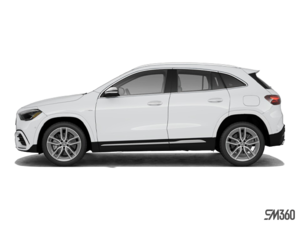
At 4,412 mm long with an 11.4 m turning circle, the GLA is built to slip into compact parking spots and tight city blocks with less back-and-forth. Its narrower turning arc and shorter 2,729 mm wheelbase make it easier to place in a parking garage or a tight driveway.
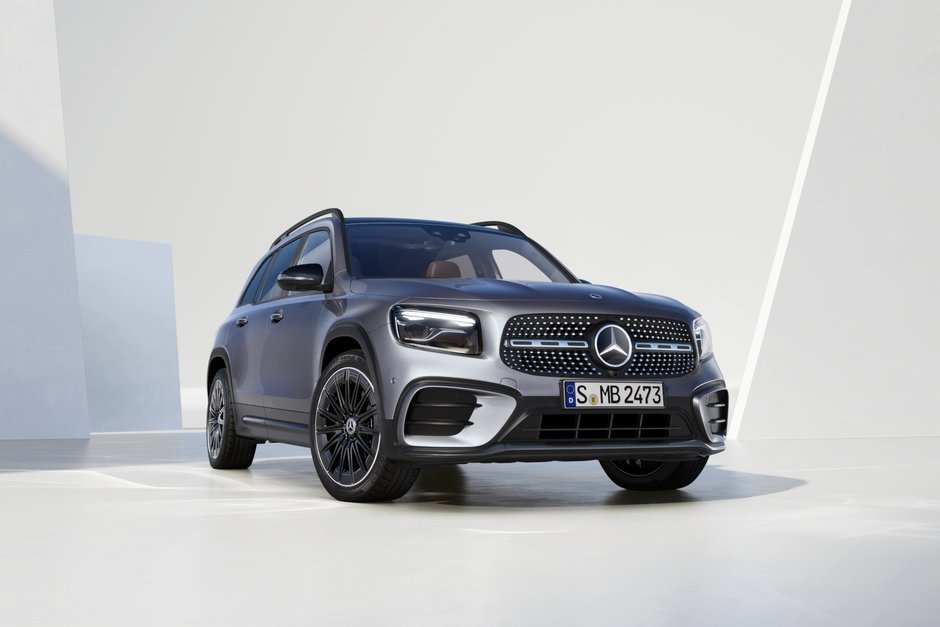
The GLB stretches to 4,634 mm on a 2,829 mm wheelbase, with an 11.7 m turning circle. The extra length adds interior room, but it also means a little more planning in cramped parking lots or narrow residential streets.
Neither SUV is oversized, and both share the same 1,834 mm width without mirrors. The difference comes down to length and turning ease rather than bulk, so how tight your daily route or garage actually is should guide the choice.
Passenger Room and Seating Flexibility
The GLA seats five, with 1,037 mm of front headroom and 1,045 mm of front legroom, plus 969 mm of rear headroom and 976 mm of rear legroom. It is a two-row SUV, and the layout leans toward a sportier, driver-focused cabin over outright passenger volume.
The GLB can be configured for five or seven passengers, adding an optional third row. Front-seat space is close to the GLA’s, but the second row (999 mm headroom, 937 mm legroom) and the fold-out third row (884 mm headroom, 740 mm legroom) give it real flexibility for carpooling, extra kids, or visiting family.
For a Quebec household regularly hauling more than four people, the GLB’s extra row solves a problem the GLA cannot.
Cargo Space for Everyday Loads
The GLA carries 425 L behind the rear seats and up to 1,420 L with them folded. Its 40/20/40-split seatbacks fold independently, slide fore-aft by 140 mm, and let longer items like skis pass through the centre section while two rear passengers stay seated.
The GLB’s cargo numbers shift with how many rows are in use, from 179 L with all three rows up to 1,805 L with the second and third rows folded flat. That range makes the GLB the more adaptable choice for weekend gear, group trips, or bulky purchases.
Tech and Everyday Convenience
Both SUVs share a 10.25-inch instrument cluster and a 10.25-inch touchscreen, so the day-to-day tech experience feels familiar switching between them. The GLA adds four USB ports and a 10-speaker audio system, while the GLB offers five USB ports, useful with extra passengers riding in the third row.
The GLA also includes Active Parking Assist, which can locate a parallel or perpendicular space, then steer, shift, and brake through the manoeuvre, along with a hands-free liftgate. These features help in tight winter parking lots where fumbling with keys or grocery bags gets old fast.
Which Mercedes-Benz Fits Your Drive?
If most of your driving happens in dense traffic, tight parking garages, and narrow streets, the GLA’s shorter length and tighter turning circle make daily life easier. Its lighter weight and quicker acceleration also suit drivers who want a sportier feel without stepping outside the compact SUV segment.
If you’re regularly moving more than four people, or need a third row for carpooling and family duty, the GLB’s added seating and wider cargo range solve that problem directly. Its longer wheelbase also helps it stay steadier fully loaded.
The right choice depends on whether your priority is agility or room, not which SUV is objectively better.
Test Driving the GLA and GLB in Quebec
The 2026 GLA and GLB share the same engine, drivetrain, and cabin technology, but they solve different daily problems: one built for tight urban footprints, one for flexible passenger and cargo space.
Visit Mercedes-Benz Rive-Sud in Longueuil to sit in both, test the turning radius in a real parking lot, and compare loading gear into each cargo area before deciding which one fits your routine.